By Mohammad Ozair Noori
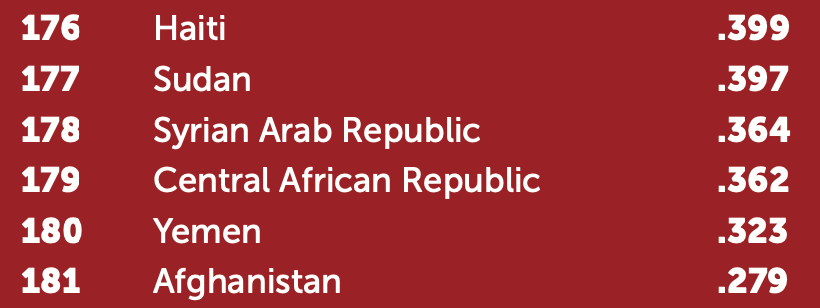
Afghanistan has once again been ranked the worst country in the world for women, according to the Women, Peace and Security (WPS) Index 2025/26, produced by the Georgetown Institute for Women, Peace and Security in partnership with the Peace Research Institute Oslo. Among 181 countries assessed, Afghanistan ranks 181st, with a score of 0.279, placing it firmly at the bottom of the global table.
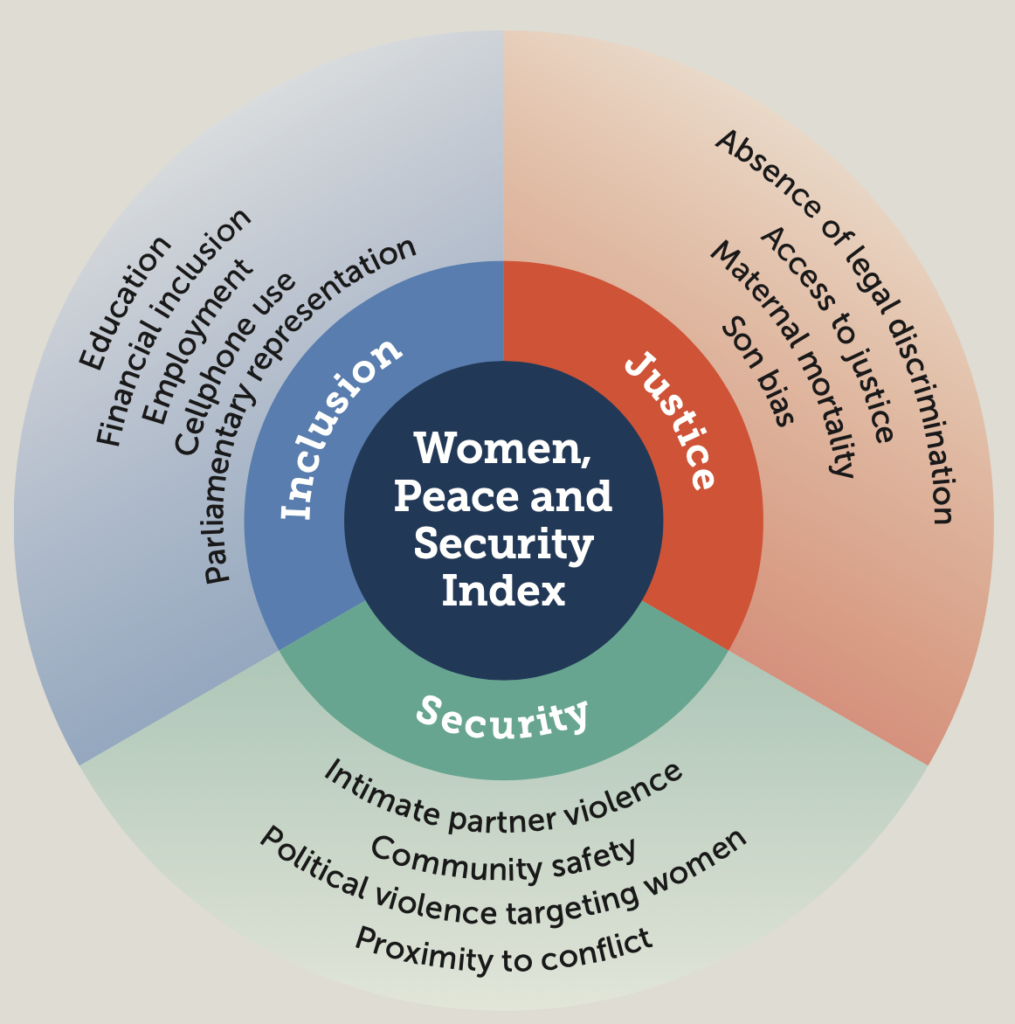
This ranking is based on thirteen internationally recognised indicators measuring women’s status across three critical dimensions: inclusion, justice, and security. Together, these indicators offer one of the most comprehensive global assessments of women’s well-being, covering education, employment, political participation, legal rights, maternal health, safety, and exposure to conflict.
Afghanistan has occupied the lowest position in this index since 2019, but the 2025/26 report shows that the gap between Afghan women and the rest of the world remains vast, and in many ways, structurally entrenched.
What the WPS Index Measures
The WPS Index does not rely on a single metric. Instead, it evaluates women’s lives using a multidimensional framework.
The inclusion dimension examines women’s access to education, employment, financial services, mobile phones, and political representation. The justice dimension measures legal discrimination, access to justice, maternal mortality, and son bias. The security dimension focuses on intimate partner violence, perceptions of community safety, political violence targeting women, and proximity to armed conflict.
Each country receives a score between 0 and 1. In 2025/26, Denmark ranked first with a score of 0.939. Afghanistan, at 0.279, scored the last position among 181 countries.
Afghanistan at the Bottom: What does that show?
The report reveals that countries at the bottom of the rankings, including Afghanistan, share several structural characteristics: extremely limited access to education and employment, weak legal protections, high maternal mortality, widespread insecurity, and deep exposure to conflict.
Among the lowest-ranked countries, fewer than half of women are employed, only about one in five women has access to a financial account, and less than half report feeling safe in their communities. Parliamentary representation of women is minimal, and legal systems often fail to provide effective protection or access to justice.
Maternal mortality in these countries remains more than double the global average, reflecting both weak health systems and the broader exclusion of women from public life and services.
One of the most alarming findings of the 2025/26 report is the scale of conflict exposure facing women worldwide. In 2024, more than 676 million women were living within 50 kilometres of armed conflict, a 74 per cent increase since 2010 and the highest number ever recorded.
Afghanistan remains among the countries most affected by this reality. The report demonstrates a strong negative relationship between women’s proximity to conflict and their overall well-being. Countries with high exposure to conflict consistently perform worse on health, safety, justice, and inclusion indicators.
Living near conflict does not only mean physical danger. It also means disrupted education, limited healthcare, restricted mobility, economic collapse, and persistent psychological stress. For women, these effects are often compounded by existing gender inequalities and social restrictions.
Although the WPS Index does not list each indicator score for Afghanistan in the overview tables, Afghanistan’s position at the bottom across all three dimensions indicates severe deprivation in nearly every area measured.
The Gap Between Afghanistan and the Rest of the World
At the top of the index, Nordic countries such as Denmark, Iceland, Norway, Sweden, and Finland continue to dominate, benefiting from strong institutions, high levels of education, robust legal protections, and relative peace.
At the bottom, Afghanistan is grouped with countries such as Yemen, the Central African Republic, Syria, and Sudan, states characterised by prolonged conflict, weak governance, and deep structural fragility.
The gap between the top and bottom is not merely statistical. It reflects a world in which a woman’s chances of living a safe, educated, and dignified life depend overwhelmingly on where she is born.
The authors of the WPS Index emphasise that women’s status is not only a moral issue but also a strategic one. Their data consistently show that countries where women are healthier, safer, and more included are also more peaceful, more prosperous, and more resilient to crises such as conflict, climate shocks, and economic instability.
Conversely, countries that systematically exclude women tend to experience deeper instability, weaker institutions, and longer-lasting conflicts.
From this perspective, Afghanistan’s position at the bottom of the index is not only a reflection of women’s suffering, but it is also a warning sign about the country’s long-term social and economic future.
Is Change Possible?
A hopeful finding of the report is that some fragile and conflict-affected states have managed to improve their scores over time. Countries such as Congo and South Sudan, despite enormous challenges, have shown measurable progress in certain dimensions of women’s status. This demonstrates that improvement is possible even under extremely difficult conditions, when women’s organisations, civil society, and supportive institutions are able to operate and receive sustained backing.
However, the report also makes clear that such progress requires political will, institutional commitment, and long-term investment, conditions that are currently absent in Afghanistan.
Conclusion
As the world marks 25 years of the UN Women, Peace and Security agenda, the 2025/26 WPS Index sends a clear message: women’s rights globally are under pressure, and in Afghanistan, they have collapsed to the lowest level measured anywhere in the world.
Afghanistan’s last-place ranking is not just an international embarrassment. It is a quantitative confirmation of a deeper structural crisis, one that affects not only women but the entire future of the country.
Without meaningful changes, Afghanistan risks remaining trapped at the bottom of every global measure of human development, stability, and dignity for years to come.