By Mohammad Ozair Noori
In late March 2026, Baktash Siawash, a former member of Afghanistan’s parliament, planted himself outside the European Parliament in Brussels and refused to move. For five days, he sat in protest in front of the institution that proclaims human rights as a founding value of the European project. He was not asking for much. He was asking the EU to say two things out loud: that what the Taliban are doing to Afghan women is gender apartheid, and that the Taliban are a terrorist organisation.
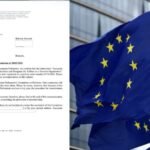
The protest moved from Brussels to Strasbourg. Activists collected thousands of signatures. On March 30, the campaign submitted its demands formally to the European Parliament as Petition 0778/2026, titled simply: “European Union: Recognise Gender Apartheid in Afghanistan and Designate the Taliban as a Terrorist Organisation.” The European Parliament registered it. That registration is not a victory. It is a first step, and it is a damning commentary on how slowly the world moves when the victims are Afghan women.
More than 1,755 days have now passed since the Taliban seized Kabul and immediately began dismantling every right Afghan women had fought for over two decades. Let that number sit for a moment. Nearly five years. And Europe has yet to formally call it what it is.
What Gender Apartheid Actually Means?
The Taliban have issued over 100 decrees stripping women of the right to education, employment, freedom of movement, and public existence. Girls are barred from school beyond sixth grade, making Afghanistan the only country on earth where girls are forbidden from secondary and higher education. Women cannot leave their homes without a male guardian. They cannot speak aloud in public spaces. In December 2024, the Taliban even banned women from nursing and midwifery training, in a country with one of the world’s highest maternal mortality rates.
In August 2024, the Taliban did not merely continue these practices; they codified them into law through the “Propagation of Virtue and Prevention of Vice” statute. In January 2026, a new Taliban penal code of 113 articles went further still, formalising domestic oppression, eliminating individual freedoms, and dividing citizens into a tiered hierarchy that renders women legally subordinate. This is not policy. This is architecture. The Taliban have built a state whose foundational structure is the elimination of women from public life.
That is what gender apartheid means, not a series of harsh restrictions, but an institutionalised system of domination maintained through law, enforcement, and deliberate intent. The UN Special Rapporteur on human rights in Afghanistan called it gender apartheid. The European Parliament itself used the term in a September 2025 resolution condemning the Taliban’s treatment of women as amounting to “gender apartheid.” And in July 2025, the International Criminal Court issued arrest warrants for Taliban Supreme Leader Haibatullah Akhundzada and Chief Justice Abdul Hakim Haqqani, charging them with the crime against humanity of gender persecution. The world’s highest criminal court has named it. The question is whether Europe’s governments will follow.
They have not, and the consequences of that silence are tangible. The international community’s habit of treating the Taliban as a difficult-but-manageable governing authority has produced not moderation, but escalation. Every concession emboldens.
Consider the UN’s own conduct: the Doha process, designed as a diplomatic framework for resolving the Afghan crisis, held three rounds of international meetings, and excluded Afghan women from all of them. When the UN sought Taliban attendance at the third Doha meeting in June 2024, it not only excluded women but removed human rights from the agenda entirely. The Taliban’s response to that capitulation was to issue their most comprehensive decree yet, restricting women, and to ban the UN Special Rapporteur from entering the country. Diplomatic accommodation of the Taliban does not produce compromise. It teaches them that persecution has no cost.
Meanwhile, the geopolitical ground is shifting dangerously. Russia lifted its terrorist designation of the Taliban in April 2025 and formally recognised the Taliban government in July 2025, the first country in the world to do so. Kazakhstan and Kyrgyzstan have quietly removed the Taliban from their terror lists. China and the UAE have deepened ties. The international order is not holding a line against the Taliban. It is retreating from one.
This is the context in which a former Afghan parliamentarian sat alone on a pavement in Brussels, asking Europe not to join that retreat.
What The EU Must Do — Now?
The registration of Petition 0778/2026 is a beginning, not an achievement. Here is what genuine commitment looks like:
First, the EU must formally recognise gender apartheid as a crime against humanity and actively support its codification in the UN crimes against humanity treaty, currently under negotiation from 2026 to 2029. The campaign to End Gender Apartheid has already submitted a legal brief to UN member states; Europe’s governments should endorse it publicly and push for its adoption. A crime without a name is a crime without accountability.
Second, EU member states must designate the Taliban a terrorist organisation. The United States already designates the Taliban as Specially Designated Global Terrorists. The Haqqani Network, whose senior figures sit in the Taliban cabinet, is a designated Foreign Terrorist Organisation under U.S. law. The ICC has issued arrest warrants for the Taliban’s Supreme Leader and Chief Justice. The legal and evidentiary foundation for designation is overwhelming. What is absent is political will.
Third, the EU must impose targeted sanctions, travel bans and asset freezes on Taliban leaders responsible for the gender apartheid system. The European Parliament has already called for this. The European Commission must act on that mandate. Symbolism without consequence is not pressure; it is permission.
Fourth, Europe must stop conditioning engagement on hopes of moderation that will never arrive. Four and a half years of engagement, dialogue, and humanitarian cooperation have not produced a single rollback of a single Taliban edict restricting women. The Taliban have not moderated. They have accelerated. Any policy framework that treats the Taliban’s behaviour as reformable is not realistic; it is denial.
Fifth, Europe must guarantee equal humanitarian access for Afghan women and refuse to fund programs that operate under Taliban gender restrictions. Humanitarian assistance that requires female aid workers to be excluded is not neutral; it enforces the apartheid system with donor money.
This is Europe’s Test
Afghan women in exile have spent nearly five years carrying their testimony to every institution that would receive them — the UN Security Council, the European Parliament’s Human Rights Subcommittee, the ICC, and the ICJ. They have not been silent. They have been ignored. The words exist. The evidence exists. The legal frameworks are being built. What is missing is the political decision to act.
They are not asking for sympathy. They are asking for accuracy — for the world to see what is happening for what it is, and to respond with the seriousness it demands. Every institution that has examined the evidence has reached the same conclusion. The ICC calls it persecution. The UN calls it a crime against humanity. The European Parliament itself has used the words “gender apartheid.” The gap is not between knowledge and understanding. It is between understanding and courage.
Political language shapes political urgency. So long as Europe refuses to formally name gender apartheid, it can keep treating the Taliban as a difficult negotiating partner rather than a criminal regime. So long as the Taliban carry no terrorist designation, European officials can keep meeting with them in conference rooms and calling it diplomacy. Words in international politics are not decoration. They are decisions — and the decision to withhold them is itself a choice with consequences.
Petition 0778/2026 is now inside the walls of the European Parliament. The next move belongs to the institution, and to the governments that fund it, speak for it, and claim its values as their own. Those values have a simple test: do they apply when upholding them is inconvenient?